
Writing height may seem simple, but many people get confused when using feet, inches, centimeters, or formal writing styles.
Whether you are filling out official documents, creating a dating profile, writing medical information, or preparing school assignments, knowing the correct way to write height can make your writing look more professional and clear 😊
Different countries and industries use different height formats.
In the United States, people commonly use feet and inches, while many other countries rely on centimeters.
On top of that, there are grammar rules, punctuation styles, and abbreviations that can change depending on the situation.
For example, writing “5’8”” is different from writing “five feet eight inches” in a formal sentence.
The good news is that learning the correct format is easy once you understand the basics.
This guide will explain the most common ways to write height, where each format is used, and mistakes you should avoid.
By the end of this article, you’ll feel confident writing height correctly in casual conversations, academic work, professional documents, and online forms 📚
🌟 Understanding the Basic Height Formats 🌟
Height is usually written in two main measurement systems:
- 😊 Feet and inches are commonly used in the United States 😊
- 📏 Centimeters and meters are widely used internationally 📏
- ✍️ Formal writing may spell out measurements completely ✍️
- 🧾 Official forms often require numeric formatting 🧾
Examples include:
- 📌 5’7″ 📌
- 📌 Five feet seven inches 📌
- 📌 170 cm 📌
- 📌 1.70 m 📌
Choosing the right style depends on where and why you are writing the measurement.
📚 How to Write Height in Feet and Inches 📚
The feet-and-inches format is one of the most common ways to describe height.
Examples:
- 😊 5’2″ 😊
- 😊 6’0″ 😊
- 😊 5 feet 9 inches 😊
Important tips:
- ✍️ Use a single apostrophe for feet ✍️
- 📏 Use quotation marks for inches 📏
- 🧠 Leave no spaces between numbers and symbols in informal writing 🧠
- 📄 Spell out measurements in formal writing 📄
This format is commonly used in sports profiles, resumes, and casual conversations.
🌍 How to Write Height in Centimeters 🌍
Many countries prefer the metric system because it is easier to standardize globally.
Examples:
- 📌 165 cm 📌
- 📌 182 centimeters 📌
Helpful reminders:
- 🌟 Use “cm” as the abbreviation for centimeters 🌟
- ✍️ Add a space between the number and “cm” ✍️
- 📚 Spell out “centimeters” in formal or academic writing 📚
Metric measurements are often used in healthcare, science, and international documents.
📝 Writing Height in Formal Sentences 📝
Formal writing requires a cleaner and more readable structure.
Examples:
- 😊 She is five feet six inches tall 😊
- 📚 The patient measured 172 centimeters in height 📚
- ✍️ The athlete stands at six feet three inches ✍️
Best practices include:
- 🌟 Spell out numbers under ten in formal content 🌟
- 📄 Avoid using symbols in professional essays 📄
- 🧠 Keep measurements consistent throughout the text 🧠
Formal height writing is ideal for reports, applications, and academic papers.
💡 Common Height Abbreviations Explained 💡
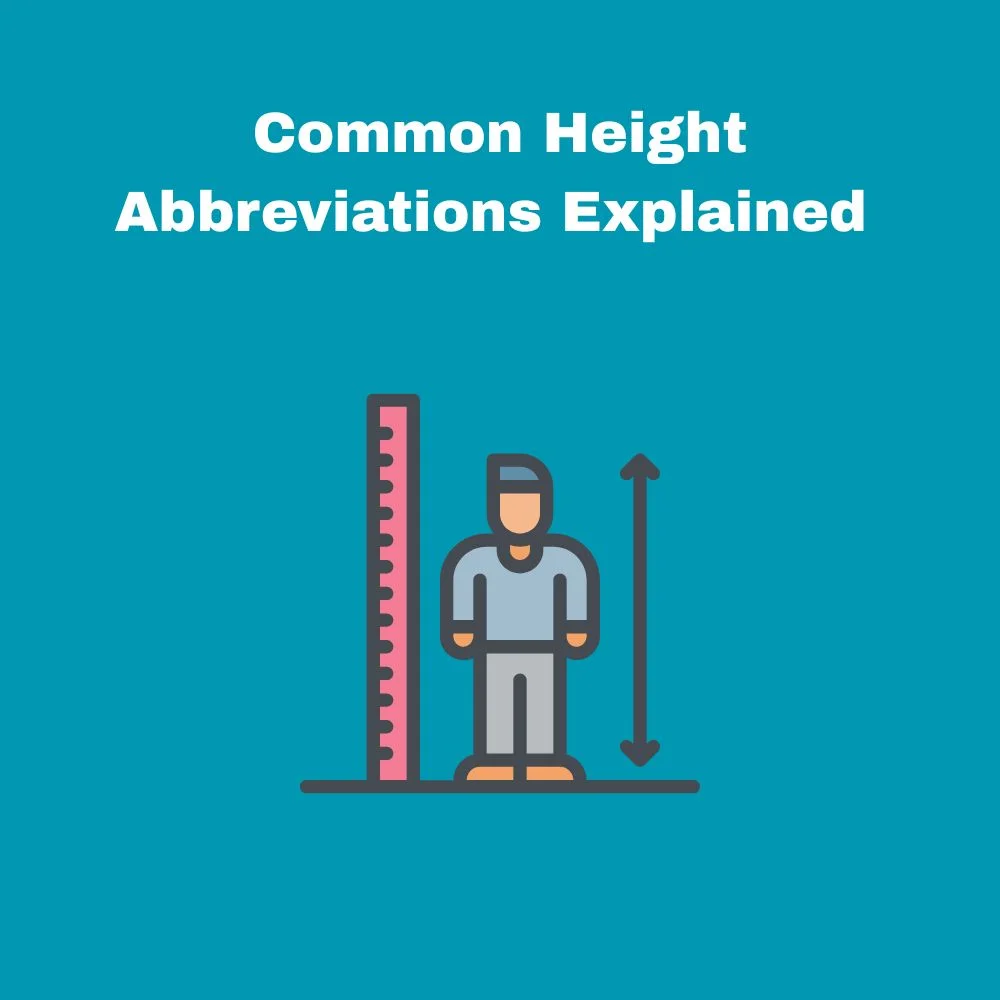
You may see height written in shortened forms online or in documents.
Common abbreviations:
- 📏 ft = feet 📏
- 📏 in = inches 📏
- 🌍 cm = centimeters 🌍
- 🌍 m = meters 🌍
Examples:
- 😊 5 ft 8 in 😊
- 📌 175 cm 📌
- 📌 1.8 m 📌
These abbreviations save space while keeping measurements easy to understand.
🚫 Common Mistakes When Writing Height 🚫
Many people accidentally format height incorrectly.
Avoid these mistakes:
- ❌ Mixing feet and centimeters together ❌
- ❌ Forgetting quotation marks for inches ❌
- ❌ Adding unnecessary spaces ❌
- ❌ Using inconsistent measurement systems ❌
- ❌ Writing unclear abbreviations ❌
Incorrect example:
- 🚫 5 feet’8 🚫
Correct example:
- ✅ 5’8″ ✅
Small punctuation errors can completely change the meaning.
📱 How Height Is Written Online and on Social Media 📱
Online platforms usually favor short and simple formats.
Popular examples:
- 😊 5’10” 😊
- 📏 178 cm 📏
- 🌟 Height: 6 ft 🌟
Tips for digital writing:
- 📱 Keep formatting simple and readable 📱
- ✍️ Use standard abbreviations ✍️
- 😊 Avoid unnecessary punctuation 😊
This style works well for profiles, bios, and online forms.
🏥 Writing Height for Medical or Official Documents 🏥
Medical and legal documents require accuracy and consistency.
Common examples:
- 📄 Height: 180 cm 📄
- 🧾 Patient is 5 feet 11 inches tall 🧾
Important guidelines:
- 🌟 Double-check measurements 🌟
- ✍️ Follow the required format exactly ✍️
- 📚 Use official abbreviations only 📚
Incorrect formatting may cause confusion in records.
🎓 How Students Should Write Height in Assignments 🎓
Students often need to include height in essays, science projects, or descriptive writing.
Helpful tips:
- 📚 Use formal wording in school assignments 📚
- 😊 Avoid slang or casual abbreviations 😊
- ✍️ Follow teacher formatting instructions ✍️
Example sentence:
- 🌟 The basketball player was six feet four inches tall 🌟
Academic writing usually favors spelled-out measurements.
🌐 Differences Between American and International Height Formats 🌐
Different countries follow different measurement systems.
Common differences:
- 🇺🇸 The United States often uses feet and inches 🇺🇸
- 🌍 Most countries use centimeters 🌍
- 📚 Scientific writing usually prefers metric units 📚
Examples:
- 😊 American format: 5’9″ 😊
- 🌟 International format: 175 cm 🌟
Understanding these differences helps avoid confusion when communicating globally.
✨ Tips for Writing Height Clearly and Professionally ✨
Clear formatting makes your writing easier to understand.
Simple tips include:
- 📏 Stay consistent with one measurement system 📏
- ✍️ Use correct punctuation ✍️
- 📚 Match the format to the situation 📚
- 😊 Keep measurements readable and accurate 😊
- 🌟 Proofread before submitting official documents 🌟
Good formatting creates a more polished and trustworthy impression.
Conclusion 🌟
Learning how to write height correctly is a small skill that makes a big difference in communication.
Whether you are writing a school paper, completing medical forms, updating a social media profile, or preparing professional documents, using the proper height format helps your writing appear clear, accurate, and polished 😊
The most important thing is consistency. If you choose feet and inches, use that style throughout your writing.
If you are using centimeters, make sure the formatting stays clean and easy to read.
Formal situations may require spelling out measurements completely, while casual or online settings often use abbreviations and symbols for simplicity.
It’s also helpful to understand regional differences. People in different countries may expect different measurement systems, so adapting your format for your audience can improve understanding.
Paying attention to punctuation, spacing, and abbreviations will also help you avoid common mistakes.
By following the tips in this guide, you can confidently write height in any context without confusion.
Clear communication always leaves a stronger impression, and even small details like proper measurement formatting can make your writing look more professional and reliable 📏✨

